One of the greatest rewards of learning to ride a bike isn't simply mastering the…
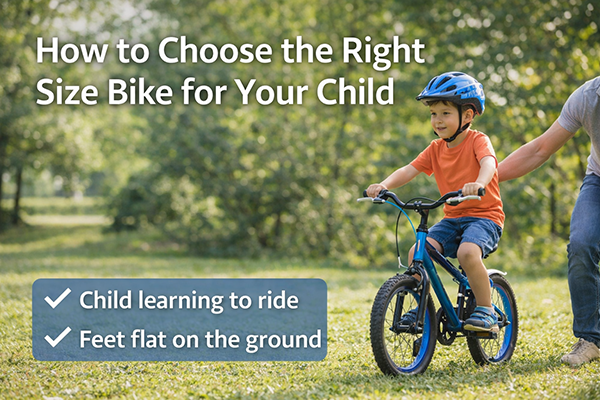
How to Choose the Right Size Bike for Your Child
Buying a bike for your child is exciting, but choosing the right size can be confusing.
Many parents assume a child will “grow into” a slightly bigger bike. Unfortunately, this is one of the most common reasons children struggle to learn to ride.
A bike that fits properly makes learning easier, safer, and far more enjoyable.
Here’s how to choose the right size bike for your child.
Why Bike Size Matters
If a bike is too big, children often feel unstable and nervous. They may struggle to reach the ground with their feet or control the bike properly.
When learning to ride, confidence is extremely important. A bike that fits correctly allows children to:
- Balance more easily
- Stop safely
- Control the bike better
- Feel more relaxed while learning
A well-fitted bike often makes a huge difference to how quickly children learn.
Children’s Bikes Are Sized by Wheel Size
Unlike adult bikes, children’s bikes are usually sized by the diameter of the wheels, not the frame size.
Common children’s bike sizes include:
- 12-inch wheels
- 14-inch wheels
- 16-inch wheels
- 20-inch wheels
- 24-inch wheels
These are only general guides. Every child is different, so it’s always better to check how the bike fits in person.
The Most Important Check: Feet on the Ground
One of the simplest ways to check if a bike fits properly is to have your child sit on the saddle.
When learning to ride, they should be able to place their feet flat on the ground while sitting on the saddle.
This allows them to stabilise themselves and feel safe when stopping or starting.
If a child has to tiptoe or jump off the saddle to reach the ground, the bike is likely too large.
Saddle Height Matters
The saddle height can usually be adjusted to improve the fit.
For children learning to ride, it’s helpful to keep the saddle slightly lower so they can easily put their feet down.
Once they gain confidence and begin pedalling more efficiently, the saddle can gradually be raised.
This progression helps children feel safe while they develop their balance.
Avoid Buying a Bike “To Grow Into”
It can be tempting to buy a slightly bigger bike so your child doesn’t outgrow it quickly.
However, a bike that is too large can make learning much harder.
Children often become frustrated or nervous if they can’t control the bike properly.
Choosing the right size now usually leads to a much better experience — and children often progress to the next size sooner once they’re confident riders.
Weight Is Also Important
Children’s bikes should be as light as possible.
Heavy bikes can be difficult for children to steer and control, especially when they are learning.
A lighter bike allows children to manoeuvre more easily and helps them build confidence.
Let Your Child Try the Bike
If possible, it’s always helpful to let your child sit on the bike before buying it.
Watch how comfortable they look.
- Do they feel confident putting their feet down?
- Can they hold the handlebars easily?
- Do they look relaxed?
These small clues can tell you a lot about whether the bike is the right size.
The Right Bike Makes Learning Much Easier
Learning to ride is a big milestone for children.
When the bike fits properly, children feel more confident and in control. This makes balancing, steering, and pedalling much easier to learn.
Choosing the right size bike is one of the simplest ways to help your child succeed and enjoy cycling from the very beginning.
Related Posts