One of the biggest challenges when learning to ride a bike isn't learning to balance…
Why Some Children Struggle to Learn to Ride a Bike
Balance Comes Before Pedalling
One of the biggest reasons children struggle is that they are taught to focus on pedalling first rather than balance.
Many traditional methods start with stabilisers. Children learn to pedal confidently, but they never develop the ability to balance the bike.
When the stabilisers are removed, the child suddenly feels unstable and loses confidence.
Learning to ride becomes much easier when children first learn to balance the bike naturally. Once balance is comfortable, pedalling tends to come quickly.
Fear of Falling
Confidence plays a huge role in learning to ride.
If a child has fallen previously or feels nervous about losing control, they may become hesitant when trying again. This can make them tense on the bike, which actually makes balancing harder.
Children often need time and reassurance to feel comfortable again. Small successes – such as gliding for a few seconds or rolling down a gentle slope – can rebuild confidence quickly.
Creating a relaxed, supportive environment is often more important than pushing for quick progress.
Bikes That Don’t Fit Properly
Another common issue is simply the wrong bike size.
If a bike is too large, children struggle to control it and can’t easily place their feet on the ground. This makes balancing and stopping much harder.
Ideally, when learning to ride, a child should be able to sit on the saddle and comfortably put their feet on the ground. This allows them to stabilise themselves and gradually build balance.
A properly fitted bike can make a huge difference to how quickly children progress.
Too Much Help From Parents
Parents naturally want to help their children succeed, but sometimes too much support can actually slow things down.
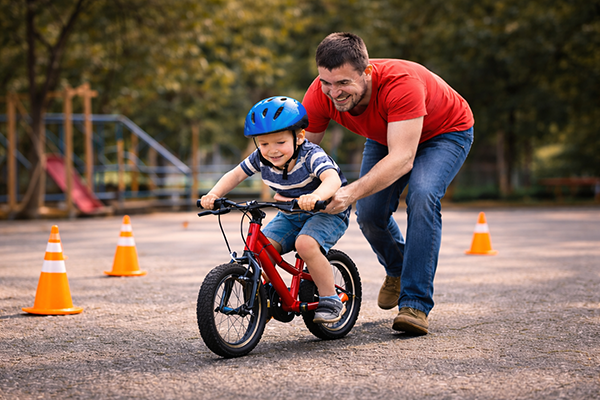
Holding the saddle or handlebars for long periods prevents children from feeling how the bike balances underneath them.
Children often learn faster when they are allowed to explore balance themselves in a safe environment.
Gentle encouragement and patience usually work better than constant physical support.
Pressure to Learn Quickly
Some children feel pressure when learning to ride.
They might see friends riding already or feel like they should be able to do it quickly. This pressure can make them nervous and reluctant to try.
Learning to ride is a skill that develops at different speeds for different children.
Allowing them to progress at their own pace often leads to better results and a more positive experience.
The Right Environment Matters
The place where a child learns to ride can also affect how easily they pick it up.
Busy parks, uneven grass, or crowded paths can make learning much more difficult.
A good learning environment is:
- Flat or gently sloping
- Smooth and open
- Free from traffic and obstacles
This allows children to focus on balancing and steering without worrying about other distractions.
Most Children Just Need the Right Approach
If a child is struggling to learn to ride, it doesn’t mean they can’t do it.
Usually it simply means they haven’t yet found the approach that works best for them.
When balance is prioritised, the bike fits correctly, and confidence is built gradually, many children learn much faster than expected.
Cycling is a skill that can stay with someone for life, and once that first ride happens, it often opens the door to years of enjoyment and independence.
Related Posts